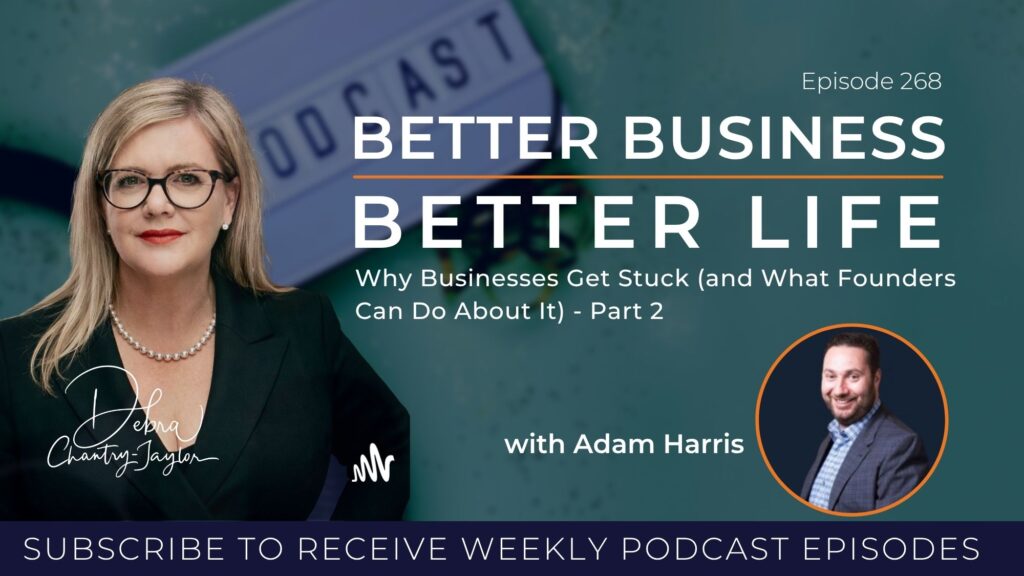


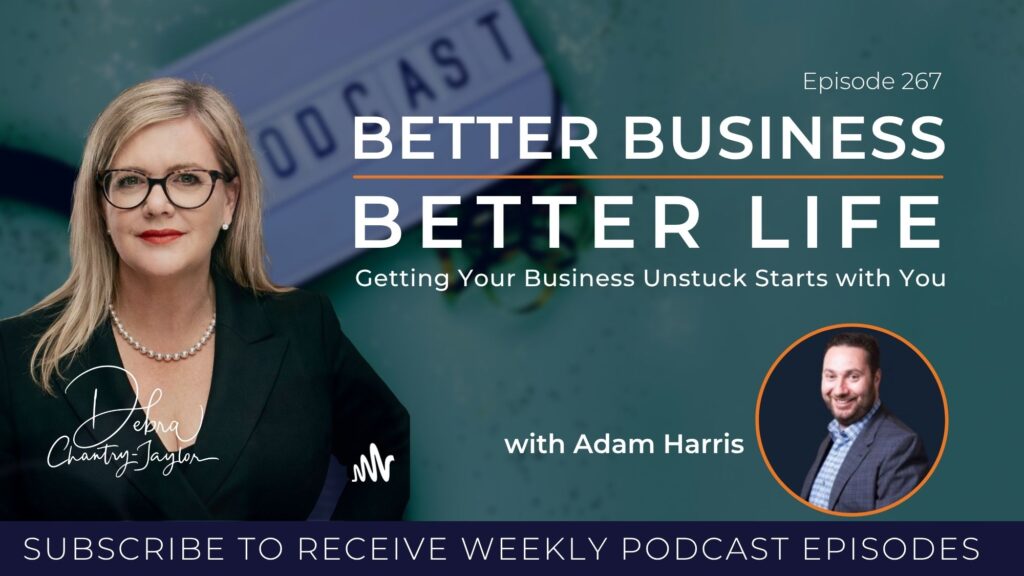
Top Tips from Adam Harris:
1. Put Doubts On The Issues List Immediately
“If there’s some doubt or a lack of clarity around something, even if it’s really small, put it on the issues list. What happens is you take that subconscious doubt and make it conscious. Once you’ve got clarity on it, you’re able to move forward. Otherwise, it just compounds and becomes much bigger than it actually is, when all it really needed was a simple question.”
2. Challenge Fear And Don’t Let It Hold You Back
“Fear is often false evidence appearing real. I see teams get caught up in past events or negative experiences, and that stops them from trying new things or challenging the status quo. If you want to move forward, you’ve got to step back, challenge your assumptions, and ask what got you here versus what will get you where you want to go. “
3. Be Honest With Yourself And Your Team
“If you’re feeling stuck, own it. Say it out loud and explore it as a team. Is it you, the team, or the business? When you’re open and honest about what’s really going on, you can start peeling back the layers and actually solve the real issue. High-performing teams don’t ignore this—they lean into it and work through it together.”
SUMMARY KEYWORDS
Business growth, fear, complacency, accountability, visionary, integrator, leadership team, execution, strategy, clarity, communication, bottleneck, self-limiting beliefs, team alignment, vision.
SPEAKERS
Adam Harris, Debra Chantry-Taylor
Debra Chantry-Taylor 00:00
One of the phrases is that you don’t need to have earned a rest. So take a rest when you need you don’t need to have earned it. The world won’t end. The business won’t fall apart. If you just
Adam Harris 00:08
take a day off. There’s some doubt, a lack of clarity around something, even if it’s something really small. Put it on the issues list. What happened is you’ve got the subconscious and the conscious clarity of the doubt that you had, you’re now able to move forward. I would say, if it
Debra Chantry-Taylor 00:24
doesn’t scare the pants off of you, then it’s probably not worthwhile doing anyway. So let’s put something up there that will scare the pants off of you.
Debra Chantry-Taylor 00:36
Welcome to another episode of Better Business, Better Life. I’m your host, Debra Chantry-Taylor, and today I’m joined by my business partner and little bro work bro, Adam Harris, and we haven’t spoken for a while, so I’m really looking forward to our chat this morning. Welcome to the show,
Adam Harris 00:51
Adam, thank you. Yeah, really excited. We’ve been talking about following up on some of the podcasts we’ve done before. So yeah, let’s get into it.
Debra Chantry-Taylor 01:00
Yeah, yeah, it’s gonna be really good. So Adam and I obviously work together. We are both EOS implementers. We are both work with family businesses, and we also run a business called integrated executives, which is very much around helping you grow your business at all levels. So what I thought we’d do, we’re gonna do a couple of podcasts back to back, which you can listen to other subsequent weeks, I thought we’d do a couple of topics. And the first we’ll do is what why businesses get stuck and what founders can do about it. And then next week, we’ll launch the how founders get their companies unstuck. So because Adam and I have got a huge amount of experience over our years working with various different businesses, we’re just going to chew the fat, and we’re going to talk a little bit about why businesses get stuck, and what you can do about it as a founder. And then I’ve also asked d2, my very helpful chat, G, P, T, to come up with 15 random questions that businesses often ask. So let’s get started. Adam, first of all, why businesses get stuck? You’ve worked with a lot of businesses over your time as a vibe. Why do you think businesses get stuck. What’s the biggest issue you see?
Adam Harris 02:02
Or biggest issue? I think there’s a couple of things. I think one is fear. That is either fear of what has gone on in the past, or fear around what may well happen in in the future. So there’s this aspect of kind of getting caught in this, in this loop, decision paralysis, not being able to necessarily be able to move forward. And that may well be internal from kind of leadership team, key personnel might be products or services, or it may well be the case of kind of the external market forces. I think the second thing is actually complacency. So there’s this aspect, which is, you know, kind of, oh yeah, things are okay. The wheels are turning. Things are happening, you know. And I remember saying that I picked up years ago, which is, if you’re not moving forward, you’re going backwards very, very quickly. So, you know, just kind of resting on your laurels, kind of becoming safe, and then, you know, all of a sudden, a war breaks out somewhere in the world, you know, or there’s a global pandemic. And the ability to be able to kind of move kind of faster and quick, isn’t there? The muscle hasn’t been been working.
Debra Chantry-Taylor 03:16
What about you? Yeah, just thinking about that, he was saying it, it’s like, it’s often we do become complacent when times are really good, and therefore, yeah, we haven’t been we haven’t been working on that quick to move and taking the opportunities. And I think that happens. You see that happening a lot when we have crises in the world. But I also think that sometimes, even within larger companies, the founders, what I’m seeing more and more of is that they they’re initially able to kind of let go as they build a team around them, and then that, if they haven’t, they’re not focused on the right things, they actually come back back in and they start middling again. And so you see them actually starting to get involved in everything again because they’re not focused on the right things, which means they then become the bottleneck, and they become the person actually kind of holds back some of the things that are happening, and it’s just because they they’ve lost their own clarity and what they need to be focused on. So I’m seeing quite a bit of that at the moment.
Adam Harris 04:13
Do you think that there’s also a challenge there, which is there’s a lack of accountability for the owner or the visionary?
Debra Chantry-Taylor 04:21
Yeah, yeah. And it’s, I mean, I’ve just as a you, as you know, I read a lot, and I just been finishing reading the visionary book by Mark winters. And I do, I sort of think that they, especially if they’re running Eos, they’ve got no choice, right? Because we give them that, we give them their accountability job. We help them develop their accountability chart, and they’ve got some really strong accountabilities. But often it just drifts over time, or they haven’t ever set that intention the beginning. And so they bring in all these really super experienced leadership team people. They allow them to kind of run the business, and then they start meddling again, because they don’t have that clear, that clarity around what they’re meant to be focusing on. So tell me a bit more about the fear, because I do see the fear side as well. So tell me a bit. More about your experience of the fear and what really drives it, and what they can do to get past it. For me, fear
Adam Harris 05:07
is an acronym of false evidence appearing real. I often find that it’s kind of quite linked to the aspects of complacency. But I think what often happens is that, especially when there’s been a variable of either good or bad, is that the, you know, the kind of, the curse of knowledge, kind of kicks in, you know, we often, we often talk about it, you know, not just from an EOS perspective, but as a as coaches, you know about kind of, you know, the tunnel of vision, of what you can see, and actually, you know, the ability to often come out every 90 days and step up and have a, you know, helicopter view, or to challenge your assumptions. And I think another thing I know, what I’ve observed with a lot of teams and a lot of businesses is that they just get caught and constrained on situations or events or relationships that have happened previously. And it’s kind of like it’s often the case of, you know, if you go to get 10 pieces of feedback, nine of which were good and one of which was negative. You know, human nature dictates that we focus on the negative. So I feel that often I see teams and businesses is that they focus on the negative and the fear and that constrains them from actually stopping them from kind of breaking free and trying new things and doing things differently, and challenging the status quo and looking at different way of doing things to kind of create the momentum and the energy and the challenge, not just with the leadership team, but from the wider business, to then be able to go and go, okay, cool. So what’s got us to this point is this? What’s going to get us to where we want to go, or how, where, or what do we need to do differently, individually, as a team, and then as a business? It is interesting.
Debra Chantry-Taylor 06:53
I know that in a lot of my quarterlies, I see the teams that are doing exactly that focusing on the negative stuff, like when they reviewing the previous quarter. And look, don’t get me wrong. You’ve got to be really honest about how things have actually gone, and you’ve got to learn from those mistakes and take them forward. But I see them where that, you know, they’ve hit sort of four out of their five numbers or high level measurables, and they’ve they’ve done sort of 80% of their rocks. And then you ask them to actually grade the quarter, and they can be really tough on themselves. It’s like, Oh, come on, where’s the celebration of success? I think sometimes they forget to think, to they focus on those things that aren’t going so well, and not necessarily focus on the things that are going well. And then I saw a brilliant quote the other day, which I think kind of sums a little bit this stuff up. It’s like, we get into this fighting fires, and we get into the thrill of solving problems and issues as they as they’re growing as fires. And it’s like what, I think there’s quoted from the lines of, if you, if you keep encouraging fighting fires, you’re just creating arsonists in the business. Yeah, that’s true.
Adam Harris 07:50
It is. And it’s interesting, as you kind of say, that is that again, I think some people who have got narcissistic nature, they love their aspects around the chaos. So when you help them, or when they’ve helped themselves, kind of get through that, and they’ve, they’ve put out all the fires, which for me, actually, I feel, is the really exciting piece it’s like now we’ve built the foundations. How and what can we kind of go through from there? Is that sometimes, like you say, people actually become arsonists, and they want to start fires because they live in that chaos theory. And I think you know, for a lot of businesses, is that that’s the norm, and actually there’s kind of, like some new learning that kind of needs to go through, is that, if we can, if we can build those foundations, what are the possibilities? What are the opportunities for us to then go individually and as a as a team, to really start working and really start making a difference. And I think for me, this is where, you know, when we start working with teams, and we talk about, you know, the 10 year target, you know, the big, hairy, audacious goal. And on the face of it, it looks absolutely impossible, that’s when it actually then starts coming to fruition. Because when you sort out the shit the bottom, that then builds the foundations. Go like, cool, we can now go and the, you know, the kind of hockey stick, you know, I know it’s a bit cliche, but I think it’s so important. And I think that’s the thing is, is that for some teams, there’s a fear of actually being positive, upbeat, and being able to
Debra Chantry-Taylor 09:16
move forward. Actually, it’s really, it’s really true. I’ve seen a lot of it just recently, where we’ve revisited some 10 year targets, and they were a little bit like, Hmm, you know, they weren’t really impossible enough, and I think that they weren’t all that motivating, and I think it’s because they get stuck in the but we don’t know how we’re going to get there. And as you and I know, you don’t actually need to know the how, right? You just need to know where you’re going, and then you will find a way to get there, and it does involve changing who you are being as much as what you are doing, because what got you to here will not necessarily get you to there. And I’ve noticed that when we change it, you know, they’re all a bit scared. And I always say, if it doesn’t scare the pants off of you, then it’s probably not worthwhile doing anyway. So let’s put something up there that will scare the pants off of you, but then you see this energy kind of change in the room. Because suddenly there’s an excitement about what is possible, because it takes them away, I think, from that thinking about fighting fires, and I call it polishing the turd, is like trying to get more and more out of the existing stuff, rather than looking at what you could do differently.
Adam Harris 10:13
I think there’s also a thing there, which is around some people don’t want to move and that, again, that may well be individually, it may well be as a team, and that’s okay, as long as you can just be open and admitting and saying, you know, actually, this is where we want to be. We like it like this. We you know, with change comes uncertainty. It creates growth, creates challenge, and you know, I think some teams are absolutely ready for it, and, you know, and they, you know, they embrace all of that, and then others need some time to transition. But some individuals and some teams are, they’re just not up for it. And there’s nothing wrong with that. But I think what’s important is, is kind of openly admit and go. You know, what we are okay where we are, the pace of which we’re going, the speed of change is okay by us. You know we want to you know we’re happy and growing 1% per year. Or, you know, continuing the way we are. There’s not the hunger, the desire or the appetite, which is matched by, you know, the real effort and energy that’s going to be needed to get them to where, you know, they some people want to ultimately get to. I think that’s a
Debra Chantry-Taylor 11:28
really good point. Actually. I think it is okay. Like, not every business needs to grow. I mean, I do always say to people, if they want to come work me, there’s no point in coming and working with me unless you do want to grow, because that’s where we’re headed. But, but it’s true. Like for some people, I remember working with an agency back in the old days, and yeah, they were, they just didn’t want to go beyond 12 people. And it’s like they had it in their mind that once you got beyond 12 people, it got harder. And there was this whole thing around, you know, the more people you have, the more difficult becomes. I tried everything in my power to convince them that, no, actually, the bigger the business gets, the easier it becomes for you as the founder and the owner. But that’s what that’s what they wanted. It’s like, okay, well, if that’s what you want, you you want, there’s nothing wrong with it. But like, at least, yeah, at least be honest about it and
Adam Harris 12:07
just stick with it, yeah. And those self limiting beliefs, you know, you know, human potential, Team potentially, is huge. And, you know, never underestimate what you can do. And if there’s people that are listening to this, and you know, it’s kind of like, oh, I can’t do that. It’s like, Well, why not? You know, there’s, there’s plenty of examples, hundreds of 1000s of examples, right on the extreme end, you know, of, you know, of human potential, of those people that do things that you never think are possible, and then teams. But it’s kind of a case of, you know, I think honesty with self is a real challenge for a lot of a lot of people. And, you know, I could remember a team that I started working with, and I only worked with them for two sessions because I asked them at the end, you know, towards the end of the second session, it’s like, I’m not sure you guys have got the hunger and the desire to to actually do this, and that’s okay, because I can’t work with you, because I need to be, I need to be working with teams that want to grow and push here’s my suggestion, you know, self implement, do what you need to do. And at the point where you go, you want to go from here to here, and you really want that exponential growth. Give me a call, they’ve never called me.
Debra Chantry-Taylor 13:24
And look, one day they might. I mean, I always say I’ve had clients who’ve literally disappeared off the face of the earth for two or three years, and then kind of come back and gone, right? We’re ready now. And at least, you know when they come to you that they truly are ready because they’ve made that decision themselves, rather than kind of being forced into it or or feeling like they’re being that. You know, the whole should, oh, but we should want to grow. It’s like, no, no, you’ve actually got to genuinely want to grow, because this stuff, it requires change, right? It’s not easy. I mean, it’s simple, but it isn’t easy. And so if you really, really want high growth, there has to be a true commitment, not only from you as the founder, but from the entire team as well.
Adam Harris 13:57
Yeah. And I’m as you were saying, that I was thinking, and I’m sure you’ve had this before, where, you know, when we talk about having the right people you know, on the bus is, you know, it’s those conversations are incredibly difficult, you know. And I have hats off to, you know, visionaries or integrators or leadership teams that are able to have those real, open dialogue and those challenging conversations without a facilitator. I’ll be honest, I haven’t seen it very often. I’ll probably count it on, you know, less than one hand, and often it’s a case that, you know, there’s a there’s a perceived willingness and desire to want to grow. But with that comes the challenge, and part of that challenge is having the one on one conversations and going, Hey, Deb, I’m not sure that this is the right thing for you anymore. Let’s have let’s have a chat. And I often find I’m sure you do is that sometimes those people, those teams, that come back, it’s like there’s been that natural attrition of those people. That didn’t get it or want it, have kind of left. It’s like, okay, cool. Now we’re ready to go. It’s like, you were ready two years ago, but you weren’t ready to have those tough conversations,
Debra Chantry-Taylor 15:10
or you didn’t have the right people around you. And that can often be the case. And so it’s interesting. It’s one of the things I also see a lot of is with founders, they will keep hold of people because they’ve been loyal, you know, they’re but they’re loyal, and they’re great, and it’s like, yeah, but are they actually holding you back? And I think anybody listening to this, sometimes you have to think really long and hard and go, Do I really have the right people around me? Are they truly the people that will get me to where I want to go in the future? And loyalty is a wonderful, wonderful thing, but it’s not a wonderful thing if that person is holding you back from what you need to achieve. And you know that if they have to have that tough conversation, they have to go, it’ll work out in the long run, like it’ll be better for the company and it will be better for the person that you’re actually letting go, because they’re going to be unhappy if you continue to grow the way you want to, and they’re in an environment that
Adam Harris 15:58
doesn’t suit them well, and you kind of leads on to what if, as the visionary is
Debra Chantry-Taylor 16:05
you’re the bottleneck. It is interesting, because it’s not just about bottleneck. Actually, different stages of business actually require different visionaries and different integrators. This is some of the work I’ve been deep diving into recently. Is that you know that the visionary that got you to we always look at the people who get you to hear may not get you to hear, but the visionary who got you to hear may not get you to hear. And the integrator that you need right now may not be the vision or the integrated that you need in the future, because it’s there are different types of integrators. There’s the slow and steady ones that kind of keep things kind of going and help to harness that chaos. And then there is those that really kind of push for the growth while still keeping the chaos under control, but really a very different mindset,
Adam Harris 16:47
and there’s a whole aspect around ego and letting go and holding on to the baby, yeah, and look, if there’s, if there’s visionaries that are listening to this who are Like, if I’m being really honest with myself, maybe I’m the issue challenger opportunity. Like, seriously, speak, speak to Debra I or speak to somebody else. Like, you know you need to, you need to be challenged. And sometimes the team that you’ve got around you, you’ve created a buffer where they’re not able to, or they don’t feel comfortable or empowered enough to challenge you the way that they should be. And I’m sure you’ve done that for the right reasons, but you need to have that challenge. It’s absolutely
Debra Chantry-Taylor 17:31
true, and I think it’s one of the things I always talk about. You know, when people think about EOS implementation, they think that we come in to kind of help teach them the tools, which we absolutely do, but I don’t think it’s where our real skill lies. I mean, sure, don’t be wrong. We’re brilliant teachers, for sure, but it isn’t, it isn’t the teaching. That’s the the basic I mean, anybody can hop online, watch YouTube videos, read some books, understand how the EOS tools work. Where the real gold comes is when you actually start to create that healthy team, that environment where we are enabling people to have those tough conversations where they’re not afraid to really talk about the elephant in the room, and it’s sometimes it’s just easier for us because we’re outsiders, and we don’t, we don’t have, we don’t have that fear. I’ve never been fearful of any of ever being sacked. In fact, I always say I go into every session sort of hoping I get sacked, because that means I’ve actually really pushed them out of their comfort zone. But we also see things from an outside perspective as well. So no fear. Got an outside perspective, and we pick up on little cues. I don’t know about you, but when I’m watching the room, you just see these little things. You kind of go, oh, there’s something there. I need to kind of push with that. Whereas, if you’re trying to be the visionary, the founder, the person who runs the business, the person who runs the meetings, the person who runs the quarterly sessions, the annual sessions, it’s really hard to play all of those roles and do
Adam Harris 18:44
them really well. I’m known for being a bit of a stickler and just kind of just sitting there, kind of going really quite quiet, and then just go, I’m wondering, what are you thinking and and often it’s just that subtle thing that gives somebody, you know, the permission to go somewhere, ask a question, bring a point up that either A, they didn’t feel comfortable in doing, or B, that they didn’t actually think that it was worthwhile adding to the conversation. And one of the things I often say is, is that say what you’re thinking, because that actually then starts the thread of somebody else going, Oh, actually, that’s taken my brain down somewhere. It’s a little bit like this conversation, you know, you say something, and then my brain then goes, Oh, yeah, what about this? And then that’s what’s really important in in these sessions. But I think as a leadership generally, is that spark of energy is kind of like, you know, flying all over that’s what creates the opportunities. Sometimes it’s not what’s right in front of us. We need to kind of dig a little bit deeper, you know, we need to challenge all those assumptions, be supporting of each other, and when you got that environment, it’s so much better.
Debra Chantry-Taylor 19:55
That’s so true. Okay, so we’ve, we’ve gone completely off script and just chatted about, right? Things, but we have talked so a couple of things. You know, there’s fear that potentially holds you back. There is that almost like when everything becomes so calm, founders often want to jump back in and create a bit of chaos, usually, because they’re not that we haven’t been very clear about what we want and expect from them. I’ve asked d2 to obviously ask write us a few questions. So I thought we’d just give this a bit of a shot and see how it goes. So number one, question, number one, question, number one, and this is the first time I’m reading them as well. So why does running a business seem to get harder as the company grows?
Adam Harris 20:28
Okay? So I think that’s a perception. It was interesting. You were saying, Yeah, and it was interesting, like you said before, about that example of that company, you said, we don’t want to go past 12. I think, do I think, or do I know? I know from the companies that I’ve worked with is that if you have no structure, if you have no clarity, if you have no process, then yes, it is challenging, because you’re trying to bring everybody on the journey. And if you don’t know what the journey is, and you don’t know what the destination is, is that, basically it’s just bit of a cost of fuck, really, I think if you are able to, you know, I mean, obviously we talk about Eos, but you know, there’s other systems and frameworks out there. If you create structure, you create foundations, you get, you know, you do the basics and get the right people sitting in the right seats. At least. I don’t believe it has to be difficult. I actually think, you know, and you often talk about, you know, business is a game, like you can make it fun. Doesn’t need to be complicated. I think, for me, is that if you have got the reps as a team and as a business of A, identifying where the issues, the challenges or the opportunities are, and B, you’re able to process and work through them fast and quick. It doesn’t have to be a challenge, no? And I think
Debra Chantry-Taylor 21:54
you’re absolutely right when you get the things like the account, the structure, the accountability, the being able to measure the right thing. So we can see we’re on track or not when you’ve got a game plan, if you game plan, if you like, if you’ve got to get an actual game plan, you’re not, you’re not growing and growing the chaos with you. You’re growing with clarity, and you’re growing with that ability to go, this is what it looks like, and it’s scalable. So, and I think the larger the business gets, the more defined each of those kind of accountability seats becomes. And then, as a founder, you actually have less and less and less to do in the day to day running of the business. You’ve got the integrator running and they’re running it smoothly because they’ve got all that clarity and accountability. It becomes easy. You can almost step away. And I think that’s that’s probably the biggest challenge, is that when you then can step away, then you feel like you’re useless. That’s what I see people that’s like, well, now what do I do? I don’t have to get involved in the day to day business. What’s my purpose? And so getting back into your visionary roots and going, what is it I’m really great at? And where do I create things? One of my clients, and I’ve got to share this in their accountability chart, as the visionary, his very first bullet point is jazz hands. And jazz hands is what he’s good at, right? And it’s like because, and that’s what he does, like he goes out there. He loves being on stage, he loves creating opportunities. He loves doing and and that’s what we want him to do, because that is where he creates magic for the business and for the industry. So get out of the day to day running, get that clarity, get somebody running the business for you, a good integrator, and then you can go back to doing the jazz hands.
Adam Harris 23:20
Yeah, I love what you said there about that’s where he’s doing or delivering the magic. And I often find that visionaries have know and understand what that magic is, but the constraints or the restrictions or the lack of something means that they’re not doing that magic anymore. And actually, when you, you know, and I don’t, I don’t believe you can just, you know, change it like that, there needs to be some time, energy and effort that’s put in. But when you can get the visionary back in that magic space, that’s like, that’s golden. I think, you know, it’s almost like, when that, when the visionary is in that space doing the magic, it’s worth, like, hundreds of people, because their ability that it’s kind of like, it’s almost like, you know, the rubes, the Rubik’s Cube, just clicks in, and then it goes gold and tune it’s like, Wow. And then the trajectory sometimes can just be phenomenal, because we’ve worked out. And I think the challenge for for a lot of visionaries is often they don’t know what that is, or the magic that they had when they first started or entered the business has been lost. So when you can help them, and when the team, and I think it’s really important that when the team can help them find that it’s just, you know, it’s almost like it kind of reminds me of when I used to be a teacher, and, you know, used to call it the light bulb moment, where you’d see a student somewhere in the classroom, and they just, they just got it so. Sometimes it was really, really subtle. I know you and I have spoken about this before. Sometimes you see those subtle changes of movements. The individual doesn’t actually realise it in the moment, in the in the session room, and you kind of come back next quarter, or, you know, at the end at the annual and they go, Oh, my God, this happened. It’s like, Yep, I can remember and trace back exactly the point when that happened, because it was the question or the situation that literally, the neurons started firing and they just started moving. Oh, it is absolutely
Debra Chantry-Taylor 25:31
God, it’s magic. And yeah, it is what we do. And I think that’s probably why I get such a buzz out of the work that we do. Okay, the next question, I think we might have already answered, but what are the most common reasons successful companies suddenly feel stuck.
Adam Harris 25:44
I do feel we have covered it.
Debra Chantry-Taylor 25:45
Yeah, I think we’ve covered that. We covered it in terms of the fear and the changes in the environment. And I think that’s not having that strong vision in terms of the exciting vision, the impossible goal. That really gets you all motivated behind it.
Adam Harris 25:59
I think the other thing I would just add is actually about ownership and accountability is a is a key part, and that if there, you know, if there are those doubts, you and it was interesting, you and I got before we kind of start this, it’s like, you know what’s going on? You know what? I’m feeling a bit mad. Okay, cool, what’s going on. So I actually think sometimes in just owning it and kind of go, Yeah, I’m feeling a bit stuck. Okay, cool. Is it you feeling stuck? Is it your team? Is it the business? Cool. Let’s explore it. And I think that’s the opportunity. Is that when those, you know, when those situations, which sometimes are really obvious, but actually sometimes it’s a little bit more subtle, you know, when you’re able to just turn around at the leadership team and you’re checking in, or you’re put on the issues list, going, I’m not feeling 100% okay, cool. What’s going on? Let peel away the layers like, you know, and again, it kind of comes back to what we said before. Is that, you know, you can deal with the fires, but once you get through the fires, and you’re kind of in, you know, you’re in a different state, is having that openness and that honesty individually, I think is really, I feel it’s so important, because if I’m feeling it, then either A, you felt it previously, B, you might be feeling it now, or C, you’re going to feel it at some point in the future. So what do we need to do? And you kind of work through, and it’s like, actually, Adam, don’t do any work today. Cool. Okay, cool. Go for, go for a walk. You know, do what? Do? What is going to bring you a bit more joy, get through that funk, or whatever it is, to come out the other side.
Debra Chantry-Taylor 27:35
And that was really interesting, because, again, you probably know this, but on my shower wall, I have a little bit of a plan for the year, and a few of my affirmations and things. And one of the things that was on there was about being kind to yourself. And I think one of the phrases that I use is that you you don’t need to have earned a rest. So take a rest when you need you don’t need to have earned it. And that’s a difficult one, because we’re in this kind of hustle culture, where we’re told that, you know, you need to be on all the time. Need to be going all the time. And I’m an active relaxer, so trying to just, you know, find time to relax, is always hard for me, but it’s, it’s sometimes you just do need to do that, and the the world won’t end, the business won’t fall apart. If you just take a day off and go, Fuck this. I need some time out and fuck this. I’m off to Narnia. You know, I’m like, I need to go and do something a bit different just to get my just to get myself out of it. And, yeah, I think giving yourselves permission to just go, it’s okay to do that. It’s often
Adam Harris 28:30
challenging as a visionary, specifically to be able to to see sense and understand that. And I, you know, for me, the tightness of a team, specifically the leadership team, is when there’s the awareness of the rest of the team to kind of be putting something on the issues list. Hey, next issue, Deb, your health, your well, being, your mindset, like whatever it is in kind of going, Hey, look, here’s what I’ve observed. This is what I believe the issue is cool. Let’s talk about it as a team. You know? I think, I think that that, you know, that really, if I lean into kind of that, kind of, that aspect to kind of the five dysfunctions, it’s, it’s, it’s really about connection and knowing and knowing that if I have the conversation, it’s going to be challenging for me, but also for the other person. But actually, if I don’t have the conversation, you know where and what’s going to happen, it’s, it’s almost like kind of, it’s the building of the volcano. And sometimes the, you know, the valve or the energy will release naturally, but sometimes it won’t. And I think, you know, I’ve observed that real, really highly effective teams are prepared to have those conversations
Debra Chantry-Taylor 29:50
vulnerability as well. You know, a really healthy team is okay to be vulnerable, because they’ve got that trust, and so therefore they can actually do that okay. Question number three, is it. Usually a strategy problem or an execution problem when companies stall. You could take with one first, okay, cool, yes. I mean, I love this one because I don’t think it’s ever a strategy problem. I think that it’s, it is really more Well, I would say it’s not necessarily about execution, but it is around shared vision, being on the same page, which I suppose is a little bit of strategy, but it really is about, what do we need to do to kind of keep moving things forward? I think companies get stuck. They’ve got this perfect strategy of what they’re going to do, but they’re not, actually, they don’t have the accountability. They’re not making the right steps forward, taking the right steps forward, and they’re also not looking at what’s really holding them back. Maybe they’re they’re doing surface level, what I call surface level issue solving, rather than getting really deep to go what’s going on. And the example that I give is one of my clients. I remember observing a level 10 meeting, and they had a scorecard measurable, which was about face to face calls. That was how the business came in, right? And they weren’t hitting it, and they hadn’t hit it for weeks and weeks and weeks. And weeks and weeks. And when I observe the level 10 metre, they didn’t drop it down. And I said, Why have you not dropped that down? It’s been off track for weeks. And like, oh, we know why it’s off track, but that doesn’t make it any better. So you might want, you might well think you know why it’s off track, but, but to not talk about it and just go, Well, we know why it’s happening. Surely the business is not going to getting to where it needs to get to because we’re not doing the work that needs to get it there. And so then we dropped it down, and we had the conversation around it, and it’s absolutely true, they did know why it wasn’t happening. It’s because the person who was accountable being the founder, didn’t actually like doing face to face calls. And so it’s like, yeah, but that’s and that’s great to know that, but now we have a real issue that we have to solve, and we just did some proper IDs and got to the root cause of it and changed a few things around it. But so to me, I think it’s about that execution. It’s like, you know, what are we? Are we being honest about what’s really going on, and are we actually doing something about it to move forward?
Adam Harris 31:54
Yeah, it kind of reminds me of the quote, culture eat strategy for breakfast. In for me, culture is actually you have to have the right culture. You know, we tolerate what we accept to then be able to have the execution, ensuring that there’s the there’s the challenge, there’s the rigour, there’s the accountability, all of the culture needs to exist to ensure that you are executing against, against the strategy, you know, and again, I often find companies have been doing well, and often it’s because of external circumstances, or sometimes it’s luck, but actually what’s you know, having, having the right strategy in place is key, but the execution part, I agree, is so much more important, because you need to get once the execution is working, you can be reviewing and changing, you know, the strategy, like we do every three months, but you can have the world’s best strategy, and if It’s not being executed, you’re not going to ever, ever
Debra Chantry-Taylor 33:02
going to hate it complete. We’re on the same page. I love it. Okay. Number four, why do leadership teams often become misaligned as the company grows?
Adam Harris 33:11
So I think there’s a couple of things that come to mind. One is values you know, there’s a values misalignment. You know, the company has its own values. The individuals are misaligned. Circumstances change in, you know, individually, collectively, things you know, start moving or or are different. And think probably the biggest one I observe is kind of the team or the business you know, or the individual being outgrown. So you kind of mentioned it before, you know, what’s got you to this point is not necessarily, or the person that’s got you to this point is not the one that’s going to get you to that next point. And I think, you know, there’s, there’s a level of honesty, radical candour, being frank and fearless in having those conversations consistently to make sure, hey, am I or are you the right person for this seat to be able to move forward? And again, a high performing team is able to to to have that realisation probably three to six months before it’s going to become a real bottleneck. You know, if I’m able to go, Hey, look, team, it’s been a great ride up to this point, but I’m not the person to take this forward. Or you turn around and go, Hey, Adam, I’m wondering, are you the right person to take this forward? Like, if you’re able to get that three to six months before it is going to become a real problem. I think that’s as a real high performing culture, and it’s whole
Debra Chantry-Taylor 34:51
GWC, right? Gets it once it has capacity, they might still get it. They might have the capacity to do it, but they don’t want it anymore. It’s really important to have that conversation with them. What. They don’t have any of those three. But I think the want often disappears after a while as well. And so you’ve got to have that conversation like, you still really want to be in this role. You still really want to do it, and that applies to the founder as well, not just the leadership team. The other thing I would say is, I mean, obviously for our EOS clients, we have this rigour of coming back together every single 90 days and really revisiting and revisiting the vision, revisiting the sort of, the plan to get there, revisiting the accountabilities, the scorecard, the processes, all of that is reviewed every 90 days. And I’ve noticed when companies are either self implementing EOS or maybe not doing anything at all, it slips like they just don’t do that come back every 90 days because there’s other stuff going on. And I’ve seen it even with my EOS clients. You know, we all have it where the client says, I can’t do this quarterly because something’s come up, and it gets pushed out. And so by the time you catch up with them, it’s way more than 90 days, and they’ve, they’ve slipped off the tracks, off the railway tracks, because they’ve just, you know, everything else has got in the way and and so therefore, the the misalignment comes because we haven’t actually agreed what’s important and what we need to do and how we need to move forward. And look, let’s be honest, we’ve done it with our own business. You know, integrated executives. If I’m being real, hand on heart, we have, we’re getting, finally getting to have our quarterly this this week. But we we haven’t done that for a while, and so, more by luck than anything else, the businesses continue to do really well. And the fact we have a good integrator in there now as well. But you know, because we haven’t got together regularly, there’s probably some misalignment there. How can there not be if you’re not having regular conversations?
Adam Harris 36:27
And that recalibration piece is so important, you know, we talk about this aspect around, you know, taking a view and coming up above the forest to see which, you know, ways, where, where, where you’re cutting through. I feel that it’s kind of this aspect of, you know, what’s my favourite?
Debra Chantry-Taylor 36:48
Clarity creates confidence,
Adam Harris 36:50
and that’s it, is that, you know, I missed the circumstances meant I couldn’t attend an L 10 meeting with my ea a couple of weeks ago, I kind of felt completely lost for a whole week, because I just didn’t know what was going on. I wasn’t sure we are. We aligned on this, what’s going on and it, you know, it really becomes such a key part to have the rhythm and the cadence and the consistency. I’ll be completely honest, like I am. I’m all over the place with the way that my brain works. I don’t necessarily like structure, you know, I’d do anything to fight against structure, but actually, having the rigour and having the consistency has made things so much easier for me, because I’ve got, I’ve got clarity and understanding. I know what’s going on. I know where we’re doing it, I know why we’re doing it. And if you know, if I get out of stink, that’s when my brain starts going into a different, different area, you know? And often I’ve, I’ve felt previously is kind of those. It’s actually more about the people than it actually is about other things. It’s like, I’m not sure what, I’m not sure what Deb’s thinking anymore. I’m not I’m not sure if we’re actually kind of aligned, which then if we don’t have the conversation, then creates a level of doubt, and doubt then creates a level of anxiety, and they anxiety creates a level of fear, and fear then creates a level of real deep and on all of a sudden, it’s because I haven’t had the the area or the space to have the conversation.
Debra Chantry-Taylor 38:36
And I think what we’re guilty of what a lot of our other because we’re both visionaries in our business as well. I’m a visionary. I’m a visionary, and we’ve got our own integrated but we have a VVI meeting, a visionary, visionary integrator, meeting with our integrators to keep on the track. I think, I think you and I are always on the same page as we’re talking a lot. We have a lot of communication. We sometimes have, you know, we’re getting back into that rhythm of having it with the integrator to ensure that Karen is on the same page as us, but thinking broader than that, and this is what I see happen with my own visionaries as well. Even the VI might be on the same page, but if you’re not engaging with the rest of your team, which we’ve got other teammates out there who probably have no idea what we’re thinking, if I’m really honest. So it’s like, you know, we need to get back to that rigour of also making sure they’re brought on the thing. And I think that’s where the misalignment comes from. You know, people have to hear things. How many times Adam before they hear it? Before they hear it for the first time? 3232 That’s right. So 32 times. And so it used to be seven. And I used to say to people, if you told them once or twice, you’ve still got five or six more times to go. Well, now if you told them once or twice, you’ve still got 30 more times to go. And so you know that is the alignment only comes when you’re regularly repeating things, regularly sharing things, regularly communicating. Because, as we know, clarity creates confidence.
Adam Harris 39:47
If you’re listening or watching this and there’s some doubt of a lack of clarity around something, even if it’s something really small, put it on the issues like. Seriously, for the sake of, Hey, I just need clarity on X, cool. Thank you. One minute, what happened is, you’ve got the subconscious and the conscious clarity of of the doubt that you had, you’re now able to move forward like otherwise. And I’ve had this for myself. It just compounds, like, and all of a sudden you get to the stage and it’s like, you know, it’s so much bigger than it actually is. And all it all, it actually really needed is to just ask a question, you know, you know. And again, I feel sometimes that this is something that people miss within, within their l 10 meetings, is, sometimes it’s important if, if there’s an update that you think the leadership team need to know, or there’s a question that you’ve got, it doesn’t have to be a big, long winded issue. Sometimes it can just be, hey, here’s the issue. Hey, Debra, just to let you know, we won that piece of work that that I was pitching for, solved, done. You don’t need to then have, you know, dissect it even further. Sometimes the case that actually it’s just okay. I just need to communicate through because this is the this is the environment, this is our team. And I feel sometimes that goes unnoticed.
Debra Chantry-Taylor 41:17
So true. I mean that issues list, I always hate the term issues list, because it makes it feel like it has to be a negative but it’s also about sharing the good news. It’s also about sharing the opportunities and just having that regular communication around things. Okay, I am conscious of time, and we’re only up to question number five, so I think we’re going to answer question number five, and we’re probably going to completely change the form. We’re going to we’re going to actually call this a day for today, and then we’re going to come back and we’re going to answer the rest of the questions in the Questions in in podcast number two, which means we’re probably going to now have three or four podcasts. But let’s finish off with question number five. So how do founders accidentally become the biggest bottleneck in their own company? I feel
Adam Harris 41:56
the biggest reason why this happens is there’s a lack of awareness and what I mean by that, and I’ve worked probably over 300 visionaries over the over the years, in various different guises, is, Well, surely everybody else’s problem, or everybody else is the issue. I can’t be the problem. I’m the founder, I’m the owner, I’m the Managing Director, I’m the CEO, and I feel that the challenge often is that the team, the business, the other stakeholders, are very rarely holding the mirror up in front of the visionary’s face, even if they’re not doing performing what they say or what they should be doing, is nobody has the permission, the gravitas, the authorization, the accountability, whatever word you want to do to kind of turn around and go, Hey, Debra, you’re not performing. Often, I found is, and I’m sure you found the same, is that as the external facilitator and the external coach is, but, you know, I often, have always worked on this phrase is that if I feel uncomfortable, I’m playing in exactly the right space. So I’m more than happy to turn around and go, Hey, are you sure? Sure, it’s not you. I feel that a self awareness, B coach being able to have the challenge through from others.
Debra Chantry-Taylor 43:33
I completely agree. I think that there’s often Yeah, you’ll talk to visionaries, and they’ll sort of say, oh, you know, my team be perfectly comfortable with having that conversation with you. You just know that they wouldn’t. And it’s, yeah, it’s about helping them to sort of see that and and then also, I think it’s, I think it’s also just sometimes that they say they feel, they feel like they’ve lost their value, because there’s they’re no longer involved in the day to day running of the business. Because, if you even even for my larger team, it’s amazing how much the visionary is still involved sometimes in the day to day stuff. And when they get to the point where they’re no longer having to be I think they feel lost. And so what happens is they come back in, they start meddling again, and then they become the bottleneck again. Because bottleneck or and the bottleneck doesn’t necessarily mean everything stops with them, but it can be those end runs as well which creates a bottleneck. So they they go around the integrator to talk to the the R D person, or talk to the sales person, because they’ve got this idea, and because they go around the integrator, then you’ve got this confusion going on the team. So it creates a bottleneck, not so much because it’s all coming through one person, but because they’re they’re scrambling around in all different areas, and there’s nobody knowing exactly where they should be headed. So I see that a lot is that they just kind of feel like they haven’t got a purpose anymore. And so they want to start meddling back in the business again.
Adam Harris 44:45
Yeah, I’ve got, I’ve got one visionary who I’m working with. We’ve been working with him for a number of years, and we often talk about where’s your mojo at and it’s really been important for him to understand where he gets his mojo for. On, because at times, depending on where the business is at and what’s going on within the business, is he can’t necessarily get the Mojo from the business, so we’ve had to find other areas. You know, he actually has now set up two other businesses that he’s let’s see that he’s involved in, because he needs that. It’s almost like that’s his energy, that’s his invigoration, and needs to ensure that he’s getting that on a consistent basis. And I often find that a lot of a lot of visionaries, lot of founders, they can’t get that. They can’t get the same buzz, and they can’t get the same energy that maybe they’ve had within that kind of early pot kind of goes back to one of the questions before, is that you know when, when you have a team, and you’re able to kind of see the whites of the eyes and everybody, and, you know, everybody’s names, actually, there’s a there’s that’s a different energy to when you kind of probably got 100 people plus, it’s like, you know, I can’t, I can’t manage and lead everybody again, you know, if you’re listening to this and you’re like, I’m, you know, where do I get my Mojo from? And you might want to call it a different word, but like really spending some time thinking and leaning into that, I think is a really important piece perfect.
Debra Chantry-Taylor 46:11
And you can read the visionary book by Mark as well. I think there’s one of my favourite books at the moment, where do you get your mojo from? Where do I get my Mojo from? I just, I love helping people. So, you know, I think that it and that can be a danger in my own businesses as well, because it means that I kind of go in and I step in and I I want to help people, and I use helping, you know, with scare quotes, because I think I’m helping, but I’m actually just really messing around and really sort of fucking them up in terms of what they should be doing. So I got to be very careful around that.
Adam Harris 46:45
So I have a mantra, which is, I create a world of change, challenge and growth by holding space, asking difficult questions and going into the danger zone. So like for me, when, when, when I kind of feel the itch and the rub and and the nervousness from others, it’s like, cool. Let’s play. Doing it, doing it really respectfully and really, you know, really supportively. So often, you know, I come out of a session, you know, working with a work with a team, and I’m both fully energised and fully depleted of energy at the same point. So like you, you’re kind of managing, managing those those levels is something that’s really important. Another way you’ve actually
Debra Chantry-Taylor 47:35
articulated that, I think, because I think we’re actually quite similar, I haven’t got that kind of clarity around it, but I think that the helping is not helping as in wanting to do everything for people. It’s about wanting to help them be better. I mean, I always talk about creating better lives. That’s what really drives me, is, how do I help you create a better life? And I think that, you know, I like you. I love to poke the bear. I love to kind of see what’s going I love to challenge people and get them thinking about things. But it always comes from a place of love, and that’s why I call it help, because it’s, you know, it’s there to, I want them to see, for the greater good of themselves, for the greater of the business, what actually is possible? Okay, well, we’re going to have to call that time for this particular podcast, as we could visit here talking for hours. So if you’ve had anything in this podcast, or heard anything in this podcast, that makes you kind of think, yeah, I wouldn’t mind having a chat. Adam and I truly do live by that value of help. First we are we would absolutely love to have a conversation with you. So the contact details for us are in the show notes. Please give us a call, drop us an email, whatever works for you. We’ll be back again next week, covering off the remaining kind of 10 questions, and after that, we’ll have another episode around what founders can do to get their companies unstuck. So Adam, any final words before we wrap up this podcast?
Adam Harris 48:48
Clarity creates confidence. Take some of the things that we’ve spoken about today and maybe just sit and have a clarity break and ponder some of the things that we’ve covered.
Debra Chantry-Taylor 48:59
Love it. Hey. Thank you so much. Always enjoy our little chats. I’ll see you again shortly. You.
=======================================================================================================================================================
Debra Chantry-Taylor
Certified EOS Implementer | Entrepreneurial Leadership & Business Coach | Business Owner
#betterbusinessbetterlife #entrepreneur #leadership #eosimplementer #professionaleosimplementer #entrepreneurialbusinesscoach
Certified EOS Implementer New Zealand
Certified EOS Implementer Australia
Certified EOS Implementer UK
Certified EOS Implementer NZ