

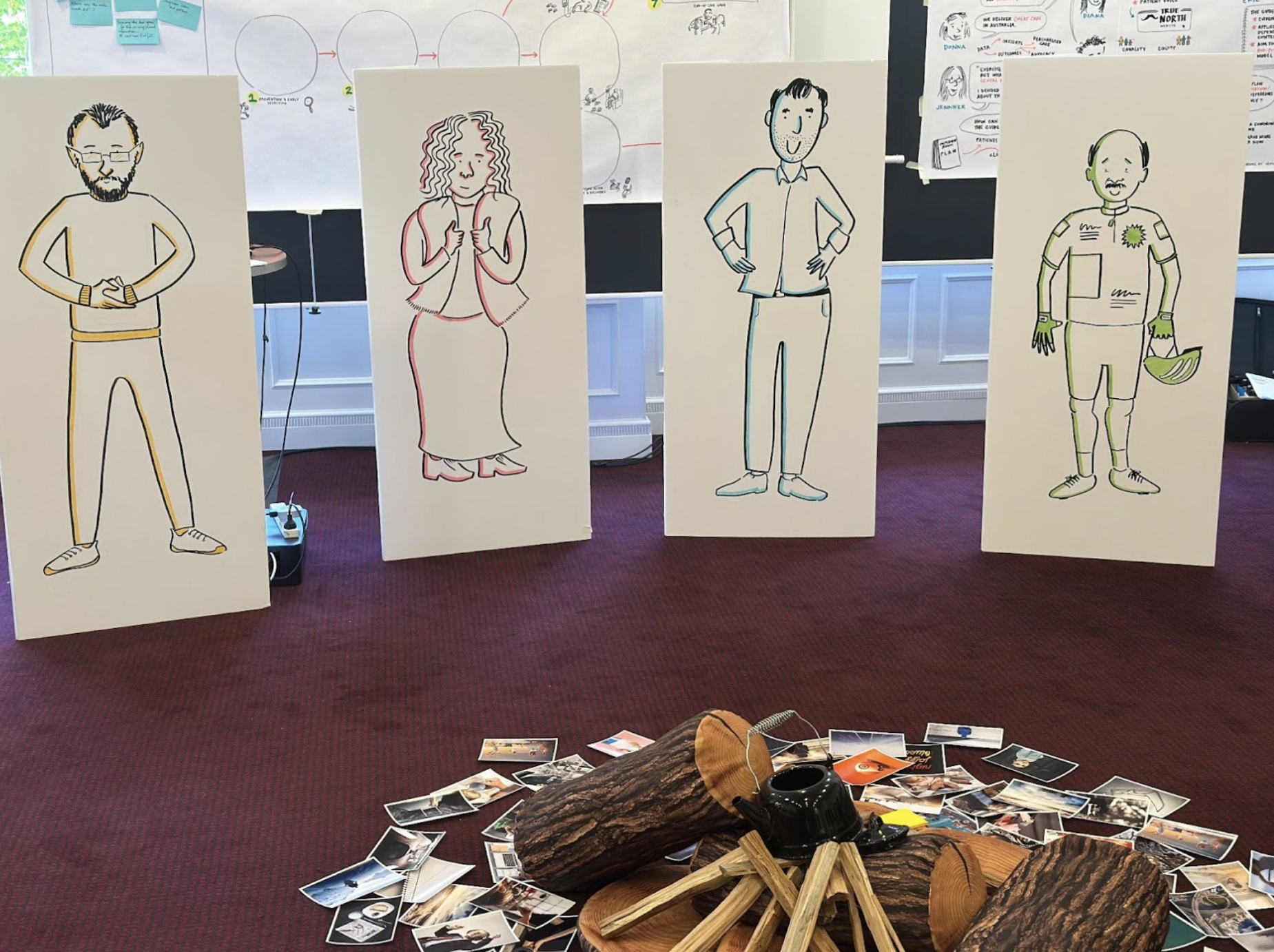
Every leader has experienced it. You walk out of an annual planning session energised, aligned, and crystal clear on where the business is heading. Your leadership team is on the same page. Decisions feel easier. The path ahead feels obvious.
But then… something happens.
A few weeks pass. People get busy. Day-to-day fires take over. New hires join. Priorities shift. Suddenly the clarity you fought so hard to create begins to fade—not because anyone is doing the wrong thing, but because humans forget.
Research in cognitive psychology shows that most people forget 50% of new information within an hour and up to 70% within a day. And that’s in normal circumstances. In today’s chaotic business environment, the forgetting curve is even steeper.
This is why the best companies don’t just document their vision, values, and strategic direction—they visualise them.
Why visuals work (even if you’re not a “visual learner”)
Most leaders don’t realise how much the brain prefers pictures over text. Studies consistently show:
- People remember images 6x more than written information
- Visuals are interpreted 60,000x faster than text
- When information is paired with a simple visual, comprehension jumps from 10% to 65%
This isn’t about making strategy “pretty.” It’s about making it memorable.
EOS® gives leaders powerful tools—Vision, People, Data, Issues, Process, Traction. But tools are only as effective as the team’s ability to retain and apply them. Visuals are one of the simplest, most overlooked ways to keep strategy front of mind long after the workshop is over.
The problem: most strategic ideas fade over time
Even in strong organisations, key concepts tend to drift into the background:
- The 3-Year Picture becomes a paragraph hidden in a shared drive
- Core Values turn into wall art nobody notices
- Ideal customer profiles get drowned out by new opportunities
- Customer journey insights gathered during planning never make it into daily decisions
- System maps—how teams work together—get forgotten as soon as restructures happen
Leaders often tell me, “We covered this last quarter—why isn’t the team acting on it?” The answer is simple: nothing stays front of mind unless it stays visible.
Visualising your strategy creates daily alignment
The EOS framework encourages you to create a visual of your Proven Process, to demonstrate to prospects that you are experienced and follow a methodology, and are not just making it up as you go.
Here are some other strategic elements that benefit from being visualised. These components of your strategy are most likely to fade; bringing them to life visually makes a dramatic difference.
1. The Customer Journey
A well-designed customer journey map shows:
- Where customers get frustrated
- What delights them
- Where handovers break
- How different departments contribute to the experience
When this is turned into a visual—one path through a customer’s eyes—the team naturally starts making more customer-centred decisions.
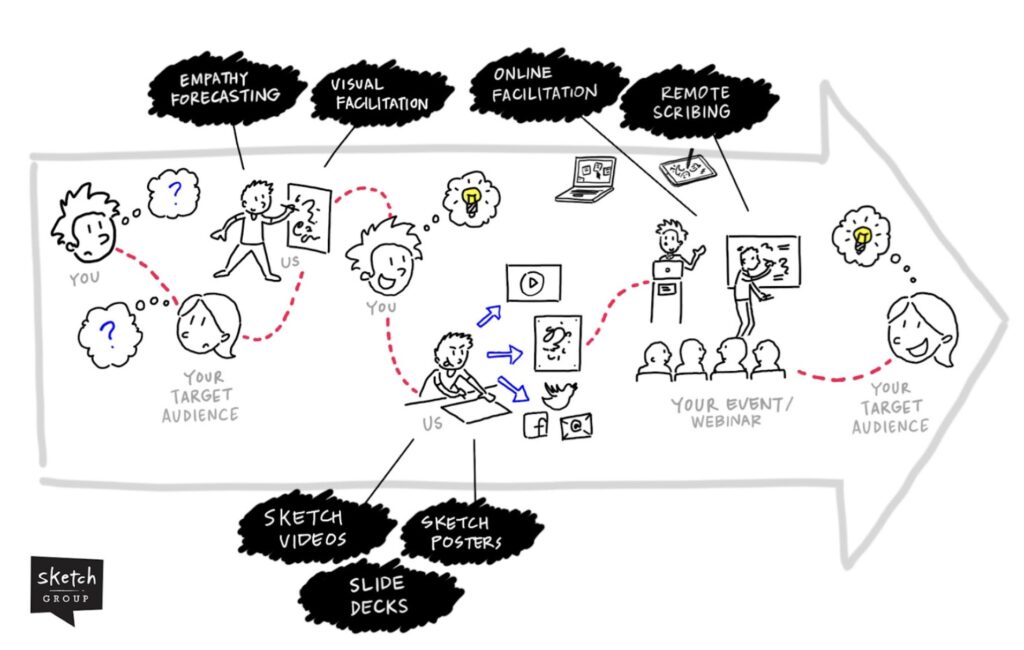
With the customer journey front of mind, you’ll note that meetings change instantly:
- “Would this step confuse the customer?”
- “Where on the journey does this problem occur?”
- “Is this decision creating friction or removing it?”
When you bring empathy back into decisions, that’s alignment you can actually see.
2. A Map of Your Business Systems
Every organisation is a system: teams, workflows, customers, partners, constraints, feedback loops.
But when this system only exists verbally or in documents, people:
- Miss interdependencies
- Blame the wrong bottlenecks
- Optimise locally rather than globally
- Lose sight of how decisions ripple across teams
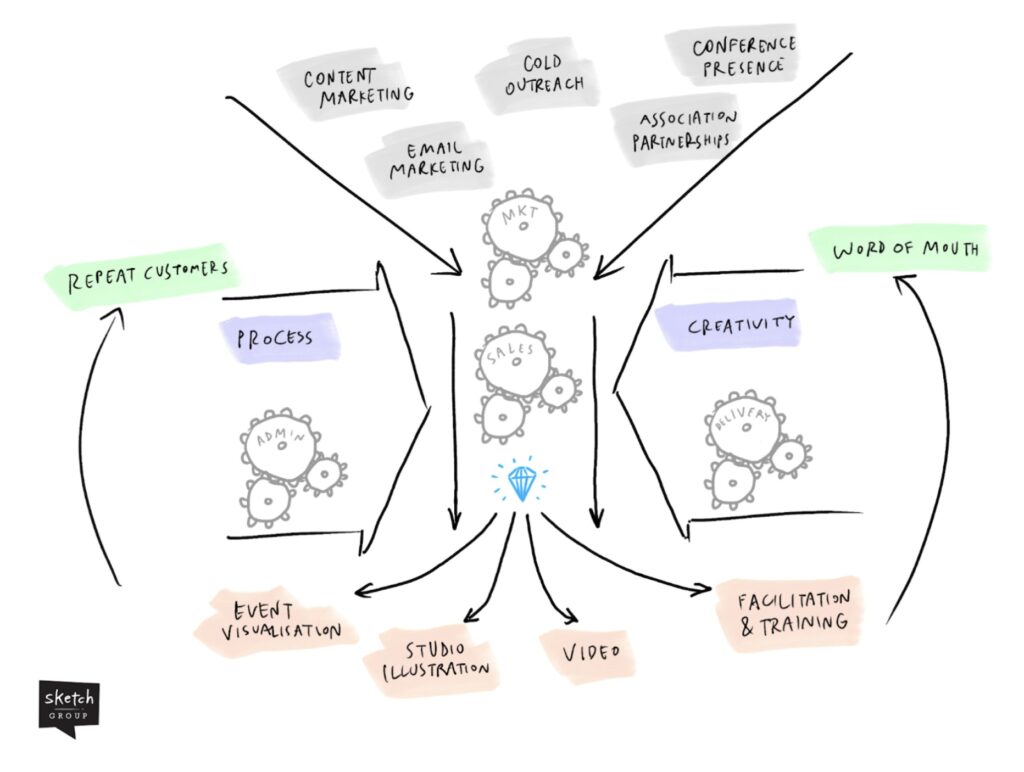
A simple ecosystem visual—internal or external—becomes the north star for collaboration.
When people “see the system,” they stop solving the wrong problems.
3. Ideal Customer Profiles
Spreadsheets and bullet points don’t create empathy. Turning Ideal Customer Profiles into illustrated personas:
- Makes them feel real
- Helps teams remember who they’re solving for
- Supports marketing and sales in staying focused
- Prevents distraction from “shiny object” opportunities
- Improves decision-making across product, service, comms, and customer experience
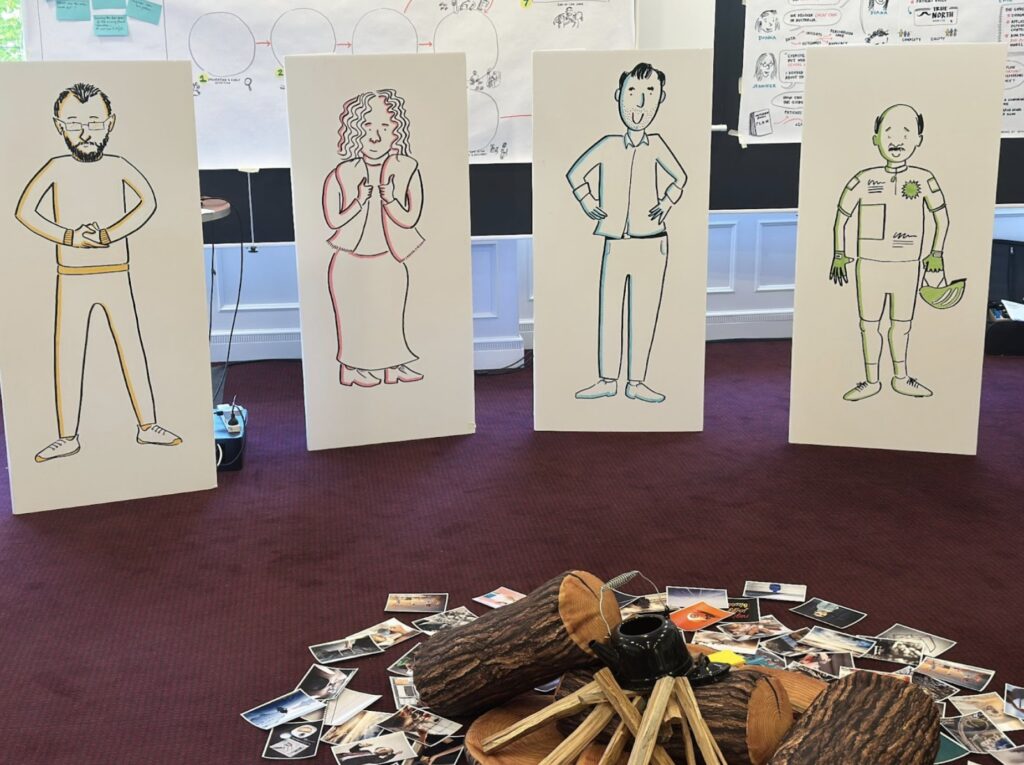
Leaders are often shocked at how quickly teams forget who their core customer is. A persona visual removes the ambiguity instantly (especially when they’re life-sized, as shown in this example!)
Small shift, big impact
Leaders often assume visuals are “nice to have.” But when paired with EOS, they become one of the most practical tools for:
- Driving accountability
- Sharpening decision-making
- Reinforcing cultural expectations
- Creating unity across teams and locations
- Keeping strategy alive between quarterly sessions
And perhaps most importantly:
Visual tools help people remember not just what the strategy is, but why it matters.
When teams see the journey, the system, the customer, and the focus, they naturally act with more clarity and alignment. Because you’re making the strategy impossible to ignore.
Final thoughts
EOS gives leaders the framework to build a great organisation. Visualisation helps that framework stick. A strategy shouldn’t live in a document. It should live in the room.
Keep it simple. Keep it human. Keep it visible.
Your strategy will go further, and stay alive longer, when your people can literally see it.

)