
Many leadership teams tell me they already have reports.
Monthly financial packs.
Sales dashboards.
CRM data.
Pipeline updates.
On paper, they have plenty of information.
But information alone doesn’t create traction.
And that’s where the EOS Scorecard is completely different.
A Scorecard isn’t a report.
It’s a predictive tool.
It tells you what’s about to happen in your business, not just what already happened.
The Problem With Most Business Reports
Most reports are historical.
They tell you what happened last month, last quarter, or last year.
Which means by the time you see a problem, it’s already baked in.
Revenue drops.
Margins tighten.
Sales pipelines dry up.
And leadership teams end up reacting instead of leading.
This is why many businesses feel constantly surprised by problems they technically had data for.
The data simply arrived too late.
A Real Example
I recently worked with a leadership team that believed their reporting was solid.
They had dashboards.
They had spreadsheets.
They had plenty of numbers.
What they didn’t have was a Scorecard.
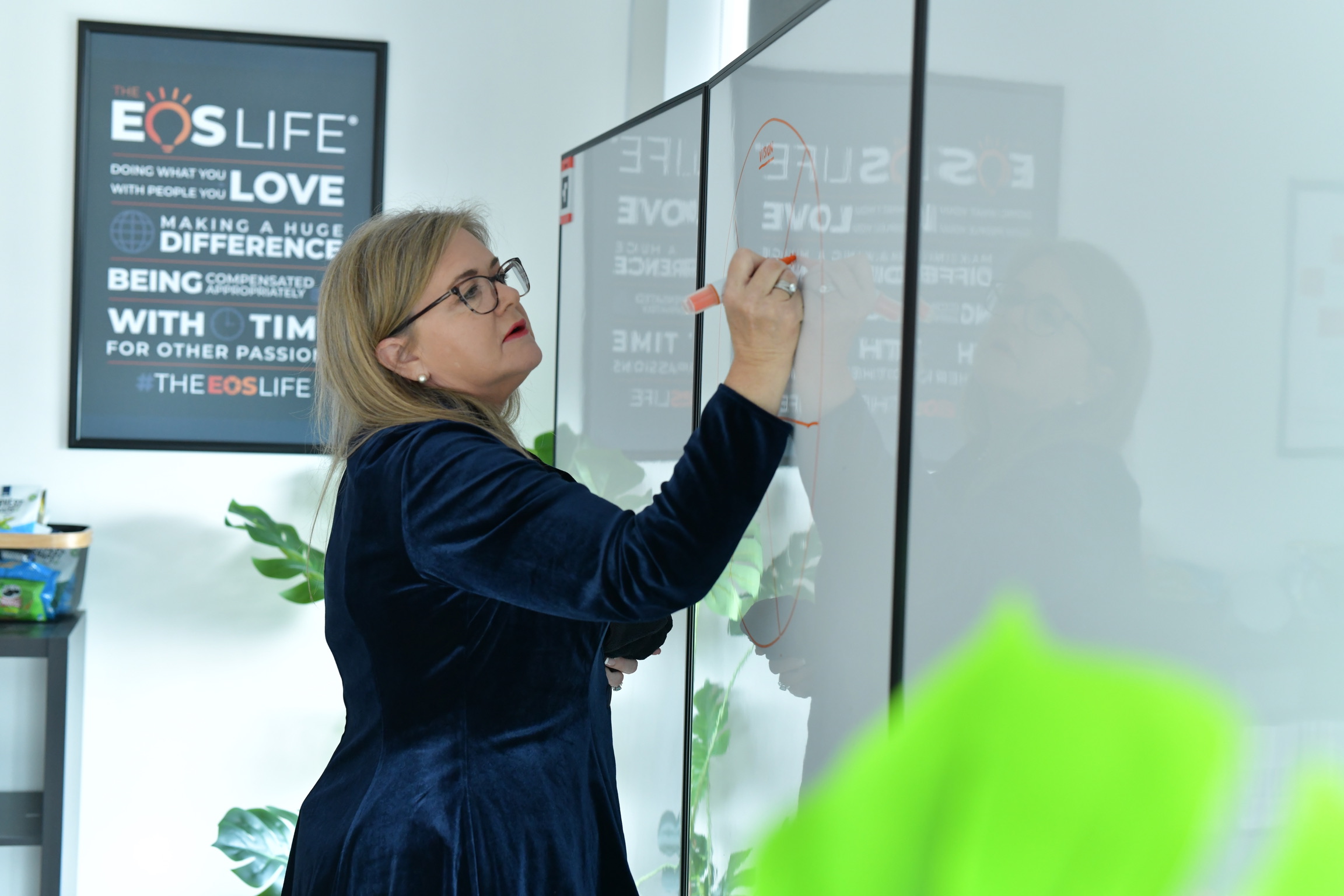
During our EOS session, we rebuilt their Scorecard from the ground up.
By the end of the day:
Each number had a single owner.
The team focused on leading indicators such as calls made & proposals sent.
Their weekly Level 10 Meeting had meaningful red & yellow flags to IDS.
One week later, they spotted a problem in the sales pipeline that would have blindsided them three months later.
That’s the power of measuring what actually drives results.
What a Great Scorecard Really Does
A well-built EOS Scorecard performs three critical functions.
It tells you if you’re winning before the month is over
You don’t need to wait for financial reports to understand whether things are working.
Your leading indicators show the trajectory immediately.
It flags issues early
When numbers move weekly, problems surface early enough to solve them.
Instead of firefighting, you course-correct.
It creates accountability
Each measurable has one owner.
Everyone sees the numbers every week.
There’s no hiding behind interpretation or long explanations.
Ownership becomes visible.
The Devil’s Advocate Question
“We already have reports. Why build something new?”
It’s a fair question.
But most reports tell you what happened.
A Scorecard tells you what’s about to happen.
And more importantly, it tells you what to do about it.
If your numbers are reviewed monthly, owned by no one, or focused purely on financial outcomes, they aren’t helping your team lead the business.
They’re just recording history.
Common Scorecard Mistakes
When teams self-build Scorecards, I often see the same problems.
Too many numbers
Once you hit 20 or more, nobody pays attention. Focus disappears.
Numbers you can’t influence weekly
If your team cannot directly influence the number each week, it doesn’t belong on the Scorecard.
Multiple owners
When everyone owns a number, nobody owns it.
Financial metrics only
Financial results matter, but they are lagging indicators. A Scorecard needs behavioural measurables that drive those outcomes.
Action, Not Reflection
The purpose of an EOS Scorecard isn’t reflection.
It’s action.
Every week the leadership team reviews the numbers.
Red flags drop straight into the Issues List.
And the team solves them together.
This rhythm creates visibility, accountability & momentum.
It’s simple.
But it’s powerful.
Final Thought
If your leadership team is surprised by problems, your numbers are arriving too late.
A Scorecard changes that.
It shows you what’s coming before the damage is done.
And that’s when leaders stop reacting & start leading.
If you want to turn your Scorecard into a real decision-making tool, let’s simplify it together.
Written by Debra Chantry-Taylor, FBA Accredited Family Business Advisor, Certified EOS Implementer & Founder of Business Action.
Business Action is focused on helping Entrepreneurs lead better lives, through creating a better business. We have a small team of accredited family business advisors, EOS Implementers & Leadership coaches, as well as access to a huge range of advisors through our Trusted Partners Network.