
When I tell people I don’t run regular one-on-one meetings, I usually get raised eyebrows.
Sometimes concern.
Occasionally judgement.
It sounds counterintuitive, especially in a world where leadership advice often insists that weekly 1:1s are the gold standard for engagement, accountability & performance.
But here’s the truth.
I don’t avoid 1:1s because I don’t care.
I avoid them because I care deeply about building businesses that don’t rely on one person at the top.
I want leadership teams that are aligned, decisive & accountable.
I want clarity of priorities.
I want fast problem-solving.
And I want leaders with space to think, not diaries full of disconnected catch-ups that drain time & energy without moving the business forward.
The Hidden Cost of Endless 1:1s
In theory, 1:1s sound useful.
In practice, many leaders are drowning in them.
I regularly meet CEOs whose calendars are packed with back-to-back check-ins. Their days look productive, but the business isn’t moving.
Why?
Because most 1:1s quietly turn into a mix of:
- Status updates that could have been shared elsewhere
- Tactical problem-solving that belongs with the whole leadership team
- Emotional offloading
- Diary coordination
- Avoidance of tougher, collective conversations
The leader becomes the hub for every issue.
Every decision.
Every concern.
That doesn’t build accountability.
It builds dependency.
Even Mark Zuckerberg Doesn’t Do Scheduled 1:1s
This usually surprises people.
Mark Zuckerberg does not run regular scheduled 1:1s.
Not even in a business worth over $1.5 trillion.
Instead, he relies on high-functioning leadership team meetings where strategy, performance & issues are addressed together.
If that sounds familiar, it should.
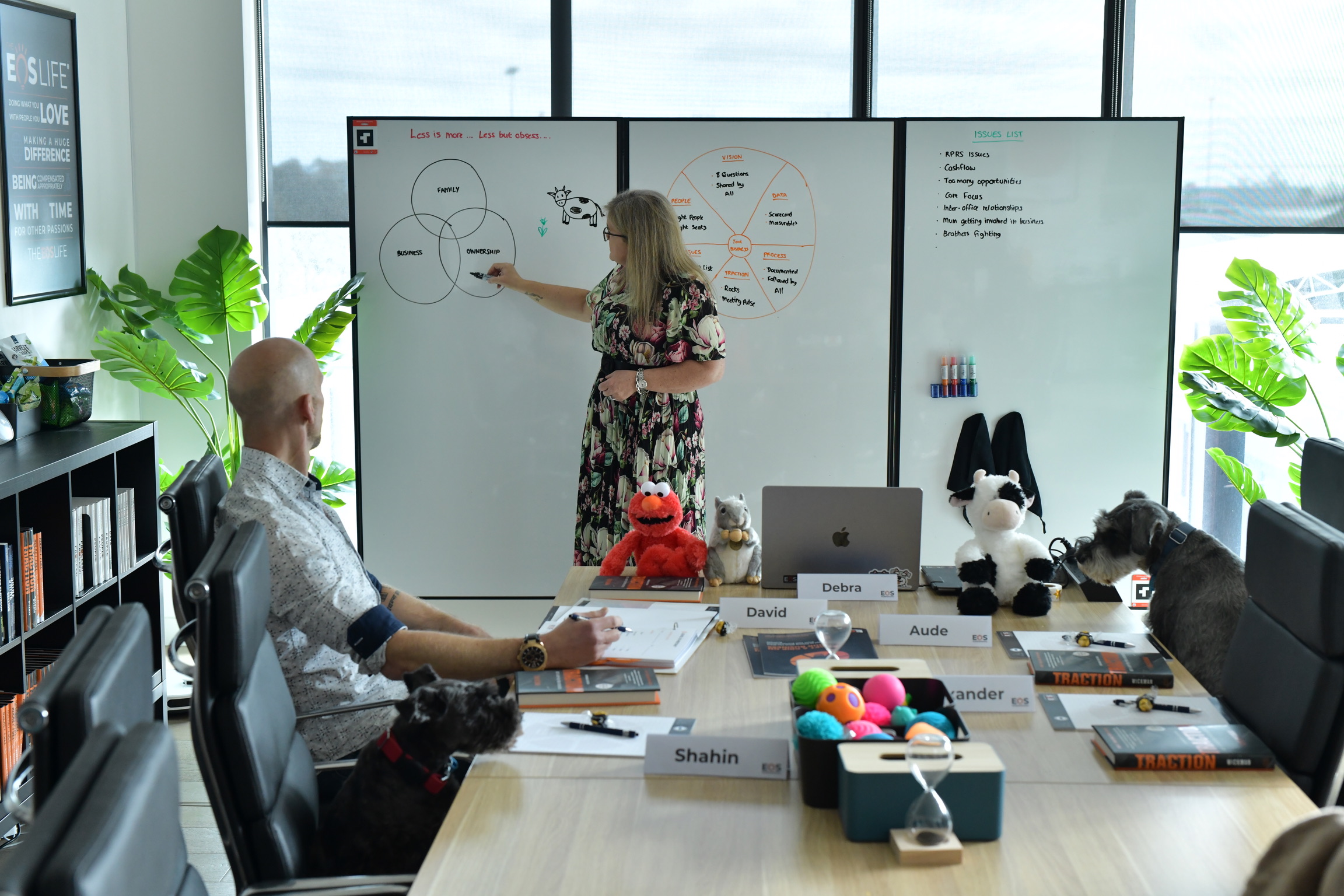
It closely mirrors the EOS Level 10 Meeting structure used by leadership teams every week.
Clear agenda. Clear data. Clear priorities. Clear accountability.
The goal is not individual reassurance.
The goal is collective execution.
A Client Example: From Busy to Effective
I recently worked with a professional services firm where the CEO was completely overwhelmed.
Their calendar was wall-to-wall 1:1s.
Every direct report needed time.
Every issue came through them.
Every decision waited for them.
They were busy all day, yet constantly frustrated by the lack of progress.
After introducing EOS, we made a deliberate shift:
- We tightened the weekly Level 10 Meetings
- We stopped the constant check-ins
- We introduced proper Quarterly Conversations
Within weeks, the CEO had breathing room again.
More importantly, the leadership team stepped up.
They started owning their numbers.
They solved issues together.
They stopped escalating everything upwards.
That’s when leadership actually started to work.
Why This Approach Works
This is not about removing connection.
It’s about placing accountability where it belongs.
1. Accountability lives in the team, not the diary
True accountability is peer-to-peer.
When a leadership team reviews the Scorecard, Rocks & People Headlines together every week, performance is visible. Everyone knows who is on track & who is not.
There’s no hiding.
No quiet slipping.
No selective storytelling.
That transparency creates natural pressure to perform without micromanagement.
2. Issues get solved where they belong
Most problems don’t belong in a private conversation.
They belong in the room.
High-performing teams solve issues together. Using a structured approach like IDS, they identify the real issue, discuss it properly & make a clear decision.
This builds alignment, commitment & momentum.
Not dependence on the leader.
3. Focus replaces fluff
Let’s be honest.
Many 1:1s drift.
They’re unfocused.
They repeat the same conversations week after week.
Well-run leadership team meetings are different.
They are time-bound, disciplined & outcome-driven.
They focus on data, priorities & people.
Less talk. More traction.
4. Quarterly Conversations replace weekly check-ins
If you are truly leading, managing & holding people accountable, you do not need weekly 1:1s.
A strong rhythm of:
- Weekly Level 10 Meetings
- Meaningful Quarterly Conversations
Gives you everything required to stay aligned, connected & clear, without becoming the bottleneck.
This Isn’t for Everyone
Let’s be clear.
If you like:
- Control
- Micromanagement
- Being the central decision-maker
- Feeling needed by everyone
Then weekly 1:1s will suit you perfectly.
But if you want:
- A self-managing leadership team
- Faster decisions
- Shared accountability
- Fewer bottlenecks
- More strategic headspace
Then it’s time to rethink how you lead.
Final Thought
Leadership is not about being involved in everything.
It’s about building a team that runs well without you.
If your diary is full but your business is stuck, the issue isn’t effort.
It’s structure.
If you want to explore how EOS helps leadership teams move from dependency to accountability, let’s talk at debra@businessaction.com.au
Written by Debra Chantry-Taylor, FBA Accredited Family Business Advisor, Certified EOS Implementer & Founder of Business Action.
Business Action is focused on helping Entrepreneurs lead better lives, through creating a better business. We have a small team of accredited family business advisors, EOS Implementers & Leadership coaches, as well as access to a huge range of advisors through our Trusted Partners Network.