

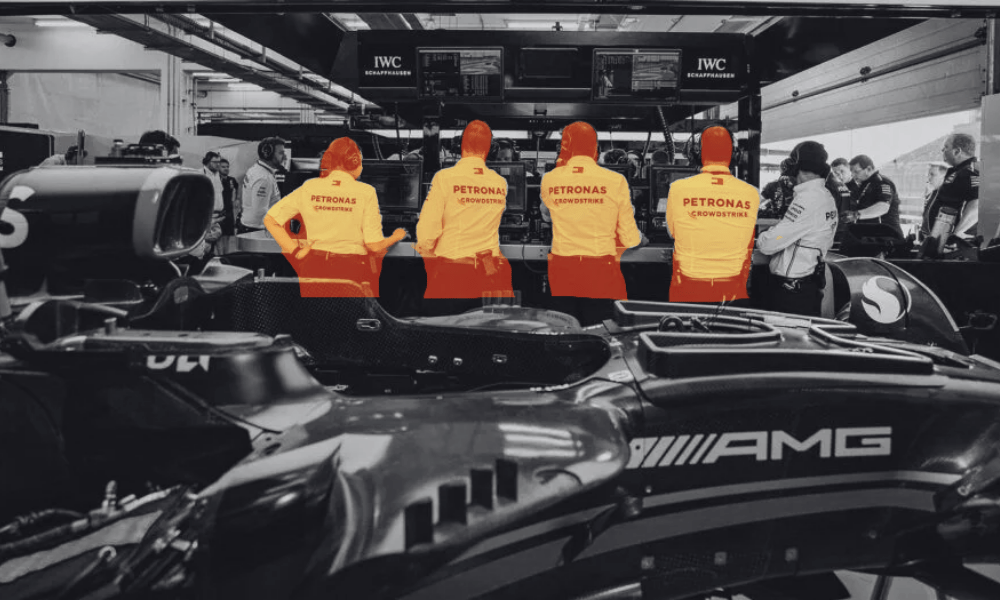
One of the most interesting things about Formula One happens after the race is over.
The crowd leaves.
The cars return to the garage.
And the teams begin analysing everything.
Every lap.
Every decision.
Every tiny detail that influenced the result.
Not simply to celebrate or criticise the outcome, but to understand what can be learned from it.
That’s what this week’s article explores.
WHAT FORMULA ONE CAN TEACH ENTREPRENEURS
Why Formula One Teams Analyse Every Race
One of the things that struck me at the Melbourne Grand Prix was what happened after the race ended. Most spectators start heading for the exits the moment the chequered flag drops. The noise fades, the excitement settles, & people begin the long walk back through the park discussing the overtakes they just watched. But for the teams, the race is far from over. In many ways the real work is only just beginning.
Inside the garages, engineers are already gathering data from the cars. Drivers sit down with race engineers to review what happened on every lap. Strategy teams replay critical moments from the race & examine the decisions they made. They are not simply celebrating the result or commiserating about what went wrong. They are studying the race like investigators trying to understand every variable that influenced the outcome.
Formula One cars generate extraordinary amounts of data. During a race, hundreds of sensors measure everything from tyre temperature to fuel flow to aerodynamic pressure. When the race finishes, that data becomes a goldmine of information for the team. Engineers analyse how the tyres behaved during long stints, how the car responded to track conditions, & how small adjustments might improve performance at the next race.
Even the smallest moments are examined closely. A slightly slower pit stop will be replayed repeatedly to understand exactly why it happened. A radio message between the driver & the pit wall might be analysed to see whether communication could have been clearer. Sometimes the difference between winning & finishing second comes down to something so small that most fans would never notice it.
What fascinates me is that the teams do this whether they win or lose. You might think that after winning a race everyone would simply celebrate & move on to the next weekend. But that is not how the best teams think. Winning does not mean perfection. It simply means you performed better than everyone else that day. The question the team asks is not whether they won, but what they can learn.
This mindset is something many businesses overlook.
When a project goes well, companies often move straight on to the next priority without stopping to understand why things worked. The assumption is that success speaks for itself. Yet success often hides valuable lessons that could be applied elsewhere in the organisation. Without reflection, those lessons are easily missed.
On the other hand, when something goes wrong, organisations sometimes fall into the opposite trap. Instead of analysing the situation objectively, the focus shifts to assigning blame. People become defensive, conversations become uncomfortable, & the opportunity to learn disappears.
Formula One teams approach the situation differently. The goal of the debrief is not to find someone to blame. The goal is to understand what happened so the team can perform better next time. Every race becomes a learning opportunity.
I often think about this when working with leadership teams. Businesses move quickly, & it is easy to rush from one quarter to the next without stopping to examine the journey. But the organisations that improve consistently are the ones that pause long enough to reflect.
What actually worked this quarter?
What slowed us down?
What would we do differently if we ran that initiative again?
Those conversations are incredibly valuable. They transform experience into learning & learning into progress.
Formula One teams understand something that applies equally well in business. Performance improves when organisations develop the discipline to look closely at what actually happened. Not what people assumed happened, & not what the outcome might suggest, but the real sequence of events that produced the result.
Over time this habit of reflection becomes part of the culture. Teams become comfortable discussing mistakes because they understand that mistakes are simply information. Success becomes something to study rather than something to take for granted.
The result is continuous improvement.
Each race becomes a little better than the one before. Small adjustments accumulate into meaningful progress. Over the course of a season, that progress often separates the championship winning teams from the rest of the grid.
Businesses operate in much the same way.
When leadership teams create space to analyse results honestly & learn from experience, the organisation becomes stronger over time. Decisions become smarter, systems improve, & the company moves forward with greater clarity.
Formula One teams call it a race debrief.
In business, it might simply be called learning.
But the principle is exactly the same.
Written by Debra Chantry-Taylor, FBA Accredited Family Business Advisor, Certified EOS Implementer & Founder of Business Action.
Business Action is focused on helping Entrepreneurs lead better lives, through creating a better business. We have a small team of accredited family business advisors, EOS Implementers & Leadership coaches, as well as access to a huge range of advisors through our Trusted Partners Network.