
Family businesses don’t struggle with effort.
They struggle with boundaries.
I often sit with leadership teams who are incredibly committed, hardworking & deeply loyal. They care about the business. They care about each other. They care about the legacy.
And because of that, they say yes to almost everything.
Yes to new opportunities.
Yes to requests from family members.
Yes to projects that “might be important”.
On the surface, it looks like ambition.
In reality, it often creates complexity, distraction & slow progress.
Why Saying “No” Feels So Difficult
In most businesses, saying no is a strategic decision.
In family businesses, it can feel personal.
Saying no to an idea might feel like saying no to a person.
Saying no to a project might feel like rejecting a legacy.
Saying no to a family member can feel uncomfortable long after the meeting ends.
So instead of making a clear decision, leaders soften it.
They delay it.
They partially agree.
They say yes, then quietly struggle to deliver.
This isn’t a capability issue.
It’s a dynamic created by overlapping roles.
The 3 Circles at Play
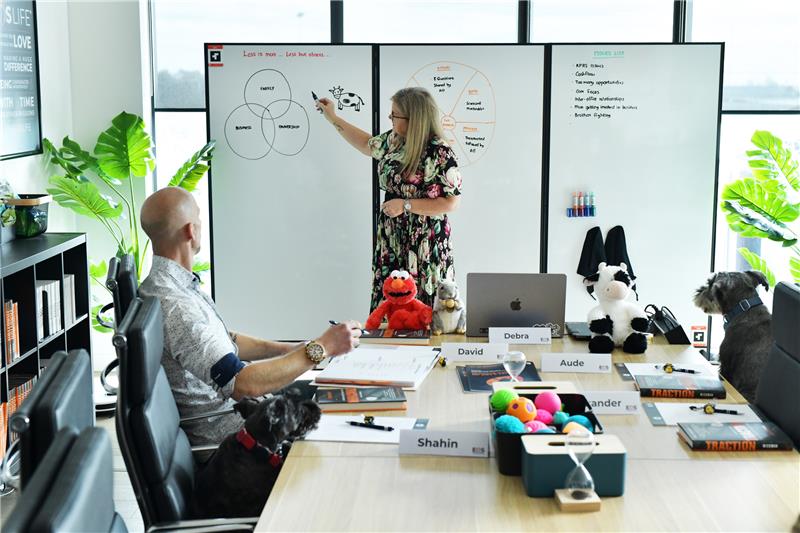
In family businesses, every decision sits across three overlapping circles:
- Family
- Ownership
- Business
What makes this complex is that people operate in more than one circle at the same time.
A shareholder might also be a sibling.
A manager might also be a parent.
So when a decision needs to be made, it’s not just evaluated on business merit. It’s filtered through relationships, history & emotion.
That’s why saying no feels heavier.
The Hidden Cost of Always Saying Yes
When a business says yes too often, the impact is rarely immediate.
It builds over time.
Priorities multiply.
Focus disappears.
Leaders feel stretched across too many initiatives.
Execution slows because energy is diluted.
This is where leadership teams start saying things like:
“We’re busy, but we’re not really moving forward.”
Strong performers feel it first. They start questioning what actually matters.
And eventually, leaders get pulled back into the weeds, trying to hold everything together.
Why This Becomes a Growth Problem
As a family business grows, the cost of saying yes increases.
More people means more dependency.
More projects means more coordination.
More complexity means less room for distraction.
Without clear boundaries, the business starts reacting instead of leading.
This is where growth begins to feel heavy instead of energising.
Where EOS Brings Discipline
EOS doesn’t remove emotion from a family business.
It gives it structure.
Rocks are a great example.
Every 90 days, the leadership team defines the few priorities that matter most. Not everything that could be done. Just what must be done.
That creates a filter.
If something doesn’t align with the Rocks, it’s not a priority right now.
The Issues List provides another outlet. Ideas, concerns & opportunities don’t get ignored. They get captured, prioritised & addressed at the right time.
And the Accountability Chart ensures decisions sit in the right seat, not across multiple people trying to keep everyone happy.
Structure allows leaders to say no without making it personal.
What Saying “No” Actually Means
In a healthy leadership team, saying no doesn’t mean rejection.
It means clarity.
It means:
- This isn’t the priority right now
- This doesn’t align with where we’re going
- This needs to wait
And when that clarity is consistent, something shifts.
The business becomes more focused.
Execution improves.
Leaders feel less stretched.
Ironically, relationships often improve too, because expectations are clearer.
What Leaders Often Get Wrong
Many leaders think they need to be firmer.
They don’t.
They need to be clearer about priorities.
When priorities are clear, saying no becomes easier.
Without that clarity, everything feels equally important, & everything gets a partial yes.
And that’s where businesses get stuck.
5 Frequently Asked Questions
1. Why do family businesses struggle to say no?
Because decisions are influenced by relationships, history & emotion, not just business logic.
2. What’s the risk of saying yes too often?
Loss of focus, slower execution, leadership overload & diluted priorities.
3. How does EOS help with this?
EOS creates clarity through Rocks, accountability through clear seats & structure for prioritising issues.
4. Does saying no damage relationships?
Not when done clearly and consistently. It often improves trust by setting expectations.
5. How can leaders get better at saying no?
By defining clear priorities and using them as a filter for decisions.
Final Thought
Saying yes feels generous.
But in growing family businesses, it often comes at the cost of focus.
Clarity is what allows a business to grow without losing direction.
And sometimes, the most important leadership move is knowing when to say no.
Written by Debra Chantry-Taylor, FBA Accredited Family Business Advisor, Certified EOS Implementer & Founder of Business Action.
Business Action is focused on helping Entrepreneurs lead better lives, through creating a better business. We have a small team of accredited family business advisors, EOS Implementers & Leadership coaches, as well as access to a huge range of advisors through our Trusted Partners Network.