

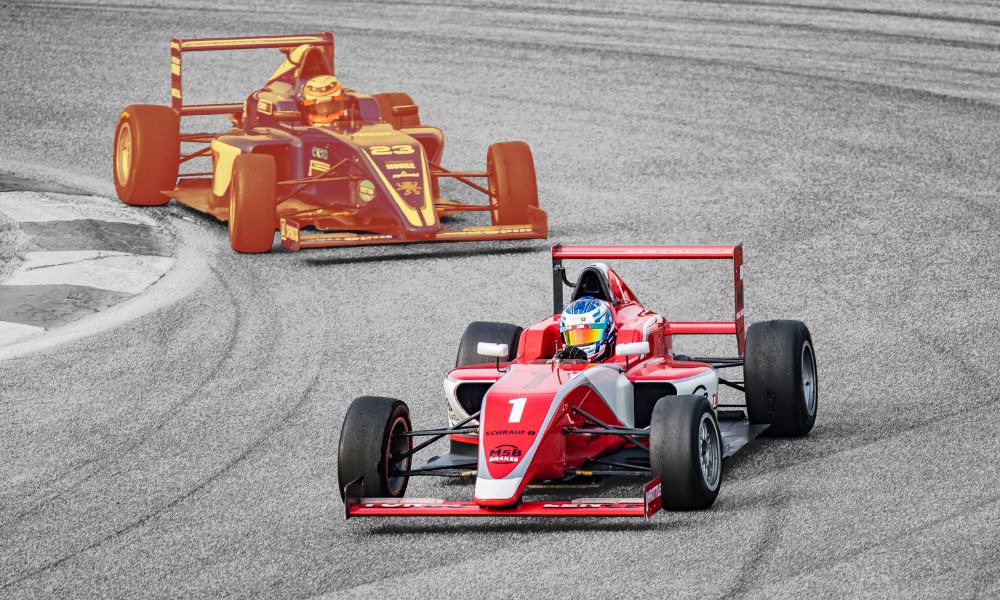
One of the things I love about Formula One is how much you can learn just by watching closely.
Not just the cars.
Not just the results.
But the way different drivers approach the race.
Some are calm & measured.
Others are fast & instinctive.
And it’s a great reminder that there’s more than one way to succeed at the highest level.
WHAT FORMULA ONE CAN TEACH ENTREPRENEURS
Two Champions, Two Very Different Ways to Lead
Standing beside the track at the Melbourne Grand Prix recently, I found myself watching something that goes largely unnoticed by most spectators. Everyone’s eyes follow the cars screaming past at nearly three hundred kilometres an hour, but if you pause for a moment & think about what you are actually seeing, it becomes clear that you are watching two very different philosophies of racing unfolding at the same time. The cars may look similar to the untrained eye, but the drivers behind the wheel often approach the sport in completely different ways. Watching Lewis Hamilton drive compared to watching Max Verstappen drive is a perfect example of this.
Lewis Hamilton has always struck me as a driver who thinks his way through a race. If you listen to the radio conversations between him & his engineers, you hear a constant stream of analysis about tyre degradation, track conditions, fuel usage & strategy. Hamilton often seems to be playing a long game, managing the car carefully while waiting for the moment when the race opens up. It is a very measured style of racing that relies on patience & awareness. He rarely looks rushed, even when the pressure is enormous.
Max Verstappen, on the other hand, brings a completely different energy to the track. Verstappen races with a kind of relentless intensity that can feel almost explosive. When an opportunity appears, he tends to attack it immediately & decisively. His style is instinctive & aggressive, which makes him one of the most exciting drivers to watch in modern Formula One. You get the sense that he is comfortable living right on the edge of what the car can do.
What fascinates me about this contrast is that both approaches have been incredibly successful. Hamilton has won multiple world championships by combining discipline, patience & strategic thinking. Verstappen has achieved extraordinary results through sheer pace & fearless racing. They are two completely different personalities operating at the very top of their sport.
Watching them race reminded me how often leadership in business works in the same way. Many entrepreneurs assume there is one correct leadership style that everyone should follow. Some people believe great leaders must be calm strategists who analyse every decision carefully before acting. Others believe the best leaders are decisive & instinctive, moving quickly & trusting their gut when opportunities appear.
In reality, both approaches can work remarkably well.
Some leaders are natural strategists who prefer to analyse situations carefully & build a plan before acting. They tend to move deliberately & they often create environments where teams feel stable & confident because decisions are well considered. Other leaders thrive on energy & momentum. They move quickly, make decisions rapidly & push the organisation forward through sheer force of drive.
The interesting thing is that neither style is inherently better than the other. What matters far more is the structure surrounding the leader.
In Formula One the driver may be the person holding the steering wheel, but the outcome of the race depends on the entire team. Engineers monitor data from hundreds of sensors inside the car. Strategists calculate race scenarios in real time. Mechanics ensure the car performs flawlessly during pit stops. The driver’s style works because the organisation around them is designed to support it.
Business leadership works in much the same way. The leader’s personality influences how the organisation moves, but performance depends on how well the team around them functions. When leadership teams understand the style of the person at the top, they can build systems & processes that support that style effectively.
If the leader tends to be analytical & strategic, the organisation can reinforce that strength by ensuring good information & thoughtful planning drive decisions. If the leader tends to be instinctive & fast moving, the organisation can create systems that ensure rapid decisions still lead to consistent results.
Problems usually arise when leadership style & organisational structure are misaligned.
Imagine a Formula One driver who thrives on instinct but is surrounded by engineers who demand endless analysis before every decision. The driver becomes frustrated because the system slows them down. Now imagine the opposite situation, where a highly strategic driver is surrounded by a team that expects constant rapid decisions without proper data. The driver becomes uncomfortable because the system feels chaotic.
Businesses encounter similar dynamics all the time. Sometimes leaders try to force themselves into a style that does not fit their natural strengths because they believe that is what leadership is supposed to look like. Other times organisations fail to build the systems required to support the style of the person leading them.
The result is friction.
Watching Hamilton & Verstappen race reminds me that success does not come from copying someone else’s style. It comes from understanding your own strengths & then building an environment where those strengths can flourish.
Hamilton wins races through patience, awareness & extraordinary consistency. Verstappen wins through speed, aggression & relentless focus. Both succeed because the teams around them are designed to support the way they operate.
Entrepreneurs often spend a great deal of time asking themselves what kind of leader they should become. The more useful question might be slightly different.
What kind of organisation needs to exist around you so that your leadership style actually works?
When the answer to that question becomes clear, the business begins to move much more smoothly. Decisions become easier, teams understand how to operate together & progress accelerates.
Formula One offers a beautiful illustration of this idea. Two drivers with completely different personalities can both dominate the sport when the teams around them are aligned with how they lead.
Leadership in business is not so different.
Written by Debra Chantry-Taylor, FBA Accredited Family Business Advisor, Certified EOS Implementer & Founder of Business Action.
Business Action is focused on helping Entrepreneurs lead better lives, through creating a better business. We have a small team of accredited family business advisors, EOS Implementers & Leadership coaches, as well as access to a huge range of advisors through our Trusted Partners Network.